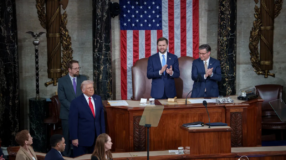
Across the country, lawmakers are making their way back to the capitol — some this week, others later in January. In many states, this is the “short session” year of the biennium. That often means fewer days on the calendar, tighter deadlines, and formal or informal limits on what can be considered.
But anyone who’s worked in a statehouse knows the label can be deceiving. As our affiliates at Connecticut’s Yankee Institute recently said, “short sessions have increasingly become vehicles for moving major policy changes quickly, often with limited public scrutiny.”
For our network, two issue areas are already dominating the opening of the session: education and budgeting. They’re perennial statehouse battles, but they take on extra significance in a year when many lawmakers are working against the clock.
Education: Mississippi Leads, While Other States Build on Previous Wins
Education is almost always the biggest issue in a state capitol, and this year is no exception.
The most consequential education bill our network is watching right now is is in Mississippi, where House lawmakers have introduced the Mississippi Education Freedom Act. This bill bundles together a number of education reforms that our affiliate Empower Mississippi has backed for years, including:
- Introducing education savings accounts that would allow families to use state funding for expenses like private school tuition, tutoring or home school curricula.
- Supporting the creation of new public charter schools.
- Making it easier for students to transfer between public school districts.
- Allowing homeschool students to play sports at public schools.
- Creating public accountability dashboards for school performance.
Two of our affiliates are strongly supporting the Mississippi Education Freedom Act, which appears to be on a fast track in the state legislature.
Empower Mississippi has put its weight behind the full package, calling it “one of the most comprehensive education reform bills our state has considered in years.” The Mississippi Public Policy Center is also advocating for the bill, describing it as “the most exciting and ambitious advancement for school choice in our state in years, perhaps ever.”
Elsewhere in our network, SPN affiliates are working to expand and solidify wins from the last few years.
In Alabama, the focus is on scaling up a 2024 major school choice reform. The CHOOSE Act created education savings accounts through refundable tax credits that allow families to use the money to cover tuition at private schools. The state’s initial program funding was limited, but the law was structured to expand eligibility over time.
For the Alabama Policy Institute, making sure that happens is the organization’s top priority this session. “We are advocating for full funding for that program so that promise can be fulfilled,” CEO Stephanie Smith said in a recent interview with Rightside Radio.
In Georgia, the key education fight is open enrollment. House Bill 917 would create statewide processes for students to transfer between school systems and between schools within a system. The proposal is back again this year after failing in the prior session, and our affiliate the Georgia Center for Opportunity has continued to make the case for open enrollment as a practical way to give families more flexibility inside the public system.
In previous sessions, the Georgia Public Policy Center has also strongly backed these reforms. “If a Georgia public school has an open seat, any Georgia student should be able to take it,” they wrote in October. “This idea isn’t fringe or partisan—broad majorities of parents across party lines support it.”
Budgeting and Taxes: Offense and Defense
In states where this year isn’t the biggest budget-writing year, appropriations decisions still determine whether reforms are sustained, starved, or gradually reshaped through implementation.
In Iowa, the focus is the top-line spending number. The most recent enacted budget increases government spending by about 5 percent year over year, and SPN affiliate Iowans for Tax Relief Foundation is cautioning that growth at that pace can become unsustainable quickly. Their message to lawmakers is straightforward: if spending keeps rising faster than underlying conditions can support, it puts long-term fiscal stability and future tax relief at risk.
In Idaho, the Mountain States Policy Center (MSPC) is supporting efforts to require a legislative supermajority vote for tax increases, framing it as a way to protect taxpayers and make it harder to raise taxes in a hurry. The organization recently released a poll showing a majority of Idaho voters favoring the approach. “Idahoans are telling lawmakers they like the state’s trajectory, but they want reforms that improve accountability, affordability, and opportunity,” MSPC president Chris Cargill wrote.
In Illinois, the work is more defensive. The Illinois Policy Institute (IPI) is warning about renewed efforts to change the state constitution to allow a graduated income tax, after voters rejected a similar move in 2020. In this new legislative session, there’s a new constitutional amendment proposal to try again. IPI warns that should it pass, it would allow lawmakers to “divide and conquer taxpayers, one income group at a time.”
The Takeaway
Short sessions compress the timeline, but they don’t reduce the stakes. That makes early engagement all the more important.
Across the State Policy Network, affiliates are already working to expand education opportunity and strengthen accountability, while pushing for budgeting discipline and tax guardrails that protect families. The common denominator is timing: in the short-session states, the biggest decisions often happen early, and our affiliates are prepared to shape what makes it to the finish line.