


After a conversation with President Ronald Reagan, State Policy Network founder Thomas Roe launched a bold experiment—one that would grow into a national movement.
Tom firmly believed that principled leaders and state-based organizations could rein in the federal government and empower states to make more responsive policies to improve the lives of citizens. After 30 years and millions of lives impacted, his vision speaks for itself.
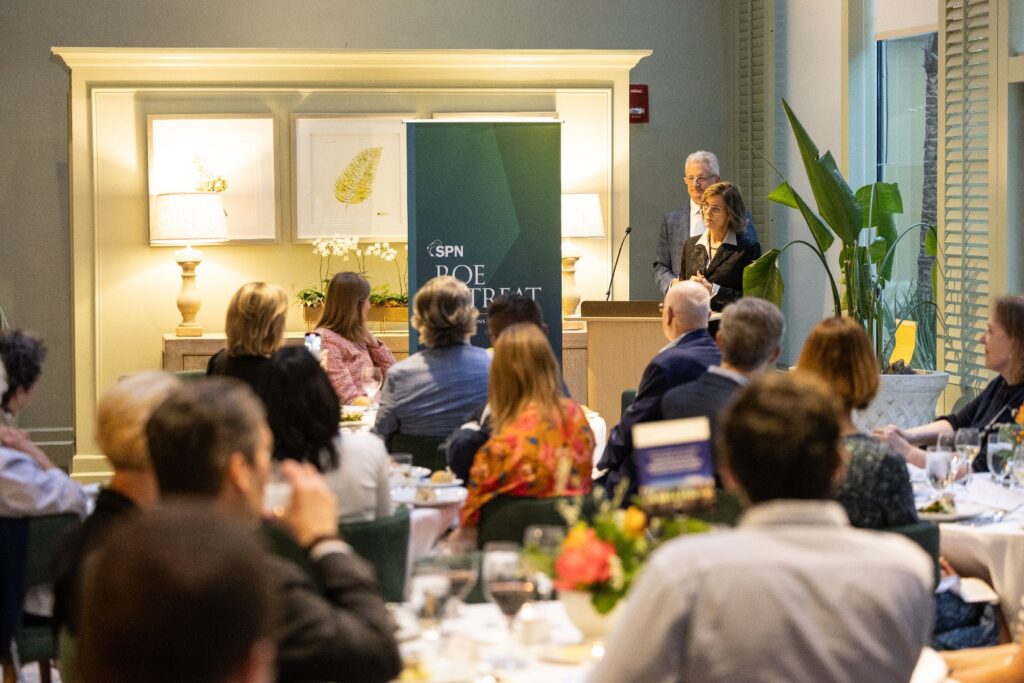
This year, State Policy Network returned to where it all began, in Tom’s home state of South Carolina, for the second annual Roe Retreat. Leaders in government, business, and policy gathered in Charleston to discuss the key issues facing the nation, like education, state-level deregulation, and returning decision-making authority to those closest to home.

Built to Endure: The Future of the State Freedom Movement
There has never been a greater opportunity—or responsibility—for states to accelerate solutions that safeguard the values that make this country a beacon of hope: limited government, individual liberty, and economic opportunity.
SPN’s president and CEO, Tracie Sharp, and SPN’s Chairman of the Board and president and CEO of DonorsTrust, Lawson Bader, opened the retreat with a reflection on SPN’s history and how Tom Roe’s vision remains at the heart of SPN’s work. “It was an honor to know Tom Roe,” said Tracie. “His entrepreneurial spirit and mindset are the foundation of our mission today. He’d be proud to see how this Network has evolved into the hub of the freedom movement.”
Tracie and Lawson also discussed SPN’s vision for the future and how leaders across the country are generating and accelerating solutions that promote freedom and opportunity. While ideas alone don’t bring about change, implementing them effectively does. SPN and our partners are planting those seeds so that states are ready when opportunities arise.

The Durable Freedom Infrastructure in Action: Stories from the States
State problems and challenges are rarely solved by one-size-fits-all mandates from Washington, DC—something Tom Roe knew well. Each state has its own unique set of challenges and opportunities, which is why SPN’s approach to policy reforms is grounded in locally led solutions. State durable freedom infrastructures are comprised of key capacities, like strong state think tanks, voter insights, litigation, investigative journalism, and political advocacy, to advance and defend wins for the long term.
Network leaders Jonathan Small (Oklahoma Council of Public Affairs), Dann Mead Smith (Project 42), and Steve Gordon (Project 42) shared with attendees how they are building out a state freedom infrastructure in Oklahoma and Washington, which have very different political climates and challenges.
They discussed how they leveraged their strengths and various capacities to ensure policy reforms last beyond an election cycle. “Durable freedom infrastructure doesn’t mean replicating exactly what someone else is doing,” said Steve Gordon, co-founder and board chair of Project 42. “It means understanding your terrain and building the tools that work there.” Washington’s infrastructure has helped elect 58 women in office who are a part of League of Our Own—a candidate recruitment capacity, while Oklahoma’s infrastructure ousted the most progressive sitting supreme court justice for the first time in the state’s history.

State-Level DOGE Efforts: Exposing Government Waste and Inefficiency
With the recent creation of the Department of Government Efficiency (DOGE), there is renewed national momentum to hold federal, state, and local governments accountable to the taxpayers they serve. While Washington may be new to the idea of rooting out waste and streamlining government, it’s been a core priority of State Policy Network and its affiliates for decades.
Experts Dominic Pino (National Review Institute) and Veronique de Rugy (Mercatus Center at George Mason University) examined the scope of government inefficiency at both the state and federal levels and how burdensome regulations and fiscal mismanagement strain the American economy and the American taxpayer.
Several states have taken strides to cut down government spending and reduce the size of government, something the federal government could learn from. For example, under the leadership of Iowa Governor Kim Reynolds, the state cut the number of state-level cabinet agencies from 37 to 16 and eliminated 500 unfilled positions, saving Iowa taxpayers a projected $214 million over four years.
The Federalism Frontline
In 2023, thanks to generous supporters, State Policy Network launched the Center for Practical Federalism, a dedicated effort to educate the American public and policymakers on the benefits of federalism—and why more power should reside with states, communities, and the American people rather than Washington politicians.
“Federalism has been greatly diminished from the Founders’ intent,” said Tracie. “SPN’s mission is to reanimate that original vision and flex our constitutional muscles—because if we don’t, every state will become little more than an administrative district of Washington, DC.”
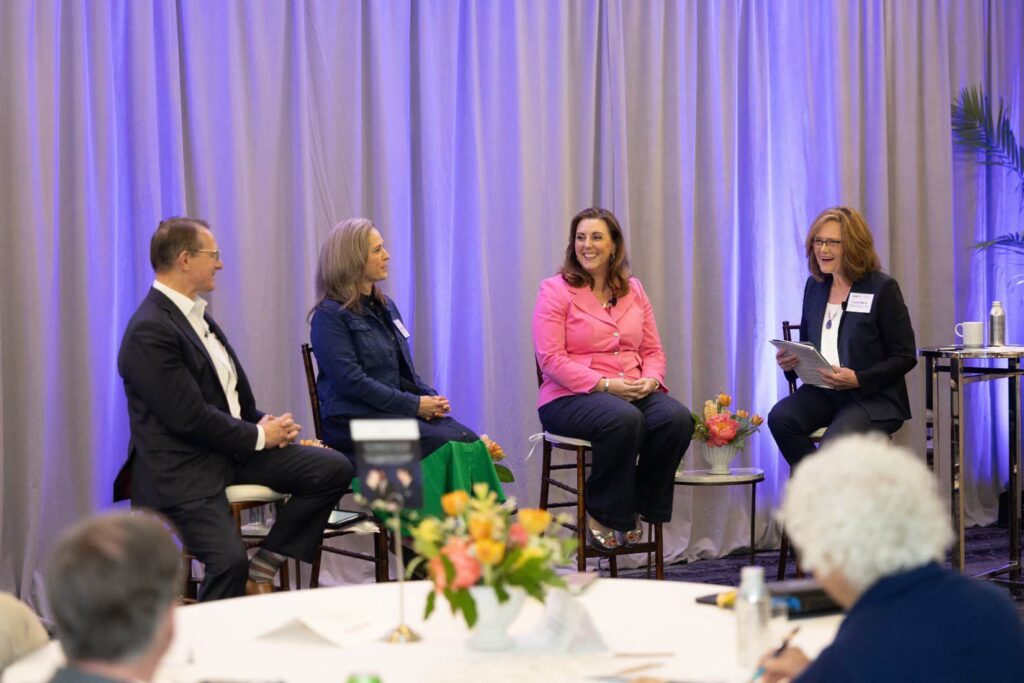
Part of that mission is cultivating federalism champions in every state who give a voice to the citizens they represent. Arizona State Senator Shawnna Bolick, Utah State Representative Ken Ivory, and South Carolina Superintendent of Education Ellen Weaver spoke with Roe Retreat attendees on how they have pushed back against federal overreach and accelerated solutions tailored to meet the needs of their constituents. From expanding education freedom to safeguarding state control over public lands, these leaders offered concrete examples of how federalism works in practice—and why it’s essential for preserving liberty for the everyday American citizen.
The momentum behind the state freedom movement has never been stronger. Across the country, leaders are seizing opportunities to deliver lasting change—not with one-size-fits-all solutions, but with ideas rooted in the principles that make America exceptional and that benefit the people in their states. The Roe Retreat is both a reflection of the depth and breadth of the Network Tom Roe built over 30 years ago and a call to action for the battles ahead. Thanks to SPN supporters and partners, the Network and this movement are built to endure—and to lead.