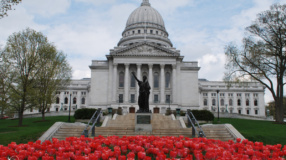
Much of the country’s political attention is fixed on Washington, but even more may be at stake in the states in the 2026 midterm elections.
Nearly three-quarters of U.S. states will elect a governor this fall. What makes this year unusual is not just the size of the map, but how open it is. Half of those states will have no incumbent on the ballot, creating unusual room for significant changes in direction.
Governors sit at the point where politics becomes policy. They sign or veto legislation, shape budgets, appoint agency leaders, and decide how aggressively state government carries out the law. In competitive states, legislative control and veto-proof margins will determine what policies are even viable.
Below is what is at stake in the key states most likely to shape the country’s policy direction in 2026.
Four States With the Most at Stake
The most consequential governor’s races are not always the closest ones. They are the races where the office could most clearly preserve, accelerate, or reverse a state’s policy direction. In 2026, several of the closest contests also happen to be the ones with the biggest policy stakes.
Georgia
Over eight years, Gov. Brian Kemp has become one of the country’s more popular governors, with an Atlanta Journal-Constitution poll last year putting his approval at 60 percent. But Kemp is now term-limited, which makes Georgia one of the most important open-seat races in the country.
Under Kemp’s leadership, Georgia Republicans overhauled the state’s old progressive income-tax structure into a flat tax and then steadily pushed the rate down ahead of schedule. At the same time, Georgia expanded school choice through programs like Promise Scholarships and a higher scholarship tax-credit cap, giving more families options beyond their assigned public school.
With a Republican governor in office, SPN affiliates and lawmakers are no longer talking only about incremental relief. The Georgia Public Policy Foundation is openly discussing larger potential victories, including eliminating the state income tax altogether and dramatically cutting property taxes on primary homes.
But Georgia is also a true battleground. It voted for Joe Biden in 2020 before returning to Donald Trump in 2024. Democrats see it as one of their clearest pickup opportunities, while Republicans are locked in a bruising primary that could leave the eventual nominee weakened and drain resources in a race the Cook Political Report rates as a toss-up.
What is at stake is the direction of Georgia itself. The next governor will decide whether the state builds on eight years of tax reform and expanded school choice, or whether those gains stall out and the state moves in a different direction.
Kansas
Democratic Gov. Laura Kelly has stymied major reforms that conservative lawmakers and state-based advocates have wanted to enact. Now Kelly is term-limited, which makes this race a direct test of whether Kansas will finally move on those priorities or keep leaving them unfinished.
That frustration has been clearest on taxes, school choice, and the size of government. Kelly vetoed major tax-cut packages and opposed the push for a flat tax, leaving Kansas with smaller, temporary fixes instead of the structural reform many Republicans wanted.
On education, the Kansas Policy Institute points out that Kansas still has only a very small scholarship program, virtually no meaningful charter-school sector, and no broad private-school choice, even as neighboring states have moved ahead. They have also warned that Kelly’s support for Medicaid expansion would grow government without solving the underlying shortage of providers.
What is at stake in Kansas is whether a red state finally gets a governor willing to move on tax reform, school choice, and spending restraint, or whether those priorities remain stalled.
Nevada
Nevada is one of the most important defensive races of the cycle because Gov. Joe Lombardo has spent his term acting as the main check on a heavily Democratic legislature. In a state where Democrats already control the rest of state government, the governor’s office has been the key barrier keeping Nevada from moving much further left.
That has shown up across several major issues. Nevada Policy has backed Lombardo’s efforts to expand Opportunity Scholarships, create an Office of School Choice, ease occupational licensing barriers, and increase housing supply by cutting red tape. Just as important, it has supported his aggressive use of the veto pen to block rent-control proposals, tenant legislation, and prescription-drug price controls that it views as anti-growth and hostile to free-market principles. After the 2025 session alone, Lombardo vetoed 87 bills.
What is at stake in Nevada is whether that check remains in place. If Lombardo loses, Democrats would no longer face a governor willing to block their agenda at scale. The state would move much closer to unified Democratic control, with immediate consequences for school choice, labor policy, housing regulation, and the broader business climate.
Iowa
Iowa has become one of the cycle’s more revealing tests. With Republican Gov. Kim Reynolds retiring, the race is open, and Democrats have made it competitive with what many view as one of their strongest recruits anywhere in the country: State Auditor Rob Sand. Republicans are taking the threat seriously enough that lawmakers have reportedly begun moving bills to limit the governor’s powers, a sign of real concern about the contest’s direction.
Under Reynolds, Iowa has spent years steadily lowering income taxes and pushing for more property-tax relief, with Iowans for Tax Relief helping shape and defend that agenda. Sand is running directly against the priorities that have defined the Reynolds years, especially on taxes and spending. A Democratic win would not automatically erase those changes, but it could slow, narrow, or redirect them.
Blue-Seat Battlegrounds
President Donald Trump swept the battleground states of Arizona, Wisconsin, and Michigan in 2024, and all three states currently have Democratic governor seats up for election this year. In a midterm likely to favor Democrats, it is hard to see Republicans flipping many seats like these.
That makes the stakes more defensive than offensive. The question is less whether Republicans break through than whether Democrats get more time to push these states further away from the reform direction conservatives have tried to build.
Arizona
Arizona is the clearest example as Democratic Gov. Katie Hobbs runs for reelection. The state has been a pioneer of the school choice movement, but the Goldwater Institute points out that Hobbs has kept trying to narrow the state’s universal ESA program through budgeting and regulation. What is at stake in Arizona is whether a Democratic governor gets another term to chip away at school choice and other legislature-backed reforms, or whether those gains are protected.
Wisconsin
Wisconsin is an open-seat race, but recent leftward wins on the state Supreme Court have already shifted power in the state. That raises the stakes for SPN affiliates like the MacIver Institute and the Wisconsin Institute for Law & Liberty, which have spent years warning about spending growth, expansive use of the partial veto, and the growing reach of the administrative state. What is at stake in Wisconsin is whether those trends remain a point of resistance, or whether another Democratic hold allows them to deepen.
Michigan
Under Gov. Gretchen Whitmer, Michigan has drifted toward heavier regulation, costly energy mandates, and a reliance on targeted tax subsidies. The Mackinac Center for Public Policy has argued that this approach is showing up in the state’s results: weak population growth, disappointing education outcomes, and a broader sense that Michigan is becoming less attractive to families, entrepreneurs, and employers.
Whitmer is term-limited and cannot run again, which makes 2026 an open-seat race. It also comes as she continues to attract attention as a potential 2028 presidential contender, giving the race added weight as a referendum on the governing model she leaves behind.
What is at stake in Michigan is whether the state keeps moving in the Whitmer direction, or whether an open-seat race creates a chance to make Michigan more competitive again.
Other Races of Note
Some governor’s races matter because they are close. Others matter because they reveal something bigger about where a state is headed and what voters are willing to tolerate.
In this group, the questions are different. Can a state keep muddling through obvious failures of governance? Can a popular governor with national ambitions keep political support even as policy problems pile up? Can a Republican governor remain a meaningful check in a state that votes blue for president?
Minnesota is an open-seat race after Gov. Tim Walz’s announced he won’t seek a third term, and the biggest issue is fraud and accountability. The next governor will inherit a state under pressure over fraud, oversight failures, immigration, and public safety. What is at stake is whether Minnesota keeps operating the way it has under Walz or whether a new governor forces a harder reckoning with accountability.
Ohio is another open-seat race, with Gov. Mike DeWine term-limited and Democrats trying to put a Republican state on the board. Donald Trump carried Ohio by more than 11 points in 2024, but the open seat still gives Democrats an opening if the national environment turns against the GOP. What is at stake is whether Ohio stays on its current course on taxes, regulation, and education, or whether a favorable Democratic year reaches into another Republican-held governor’s mansion.
Alaska will not draw as much national attention, but it is still an open seat in a state where the governor matters enormously on energy, resource development, and regulation. What is at stake is whether Alaska keeps leaning into development and affordability or turns in a more cautious direction.
Pennsylvania is not especially suspenseful as a race, but it is still important as a test of Gov. Josh Shapiro’s politics. Shapiro is both a likely 2028 presidential candidate and a very popular incumbent, even after Donald Trump carried Pennsylvania in 2024. What is at stake is whether Pennsylvania keeps moving toward a higher-cost, union-aligned approach on issues like energy and education, or whether pressure builds for a different direction.
California raises a similar question. Gov. Gavin Newsom is term-limited, but as a likely presidential contender, the political meaning of his tenure will still hang over the race. The next governor will inherit a state under pressure from housing costs, energy policy, affordability concerns, and public frustration with performance. What is at stake is whether California Democrats treat the election as permission to keep governing the same way or as a sign that even in a deep-blue state, voters want a course correction.
In both Vermont and New Hampshire, Republicans are defending governorships in states Kamala Harris carried in 2024. What is at stake in both is institutional balance. A Republican governor still serves as an important check in a political environment that is otherwise quite blue.
The Takeaway
The 2026 governor’s races are not a side show to Washington. In many states, they are the main event. Governors will decide whether recent gains on taxes, school choice, energy, and government accountability continue, stall out, or begin to reverse.
That is especially true in a cycle with so many open seats and so much room for the map to shift. In some states, the question is whether a reform agenda survives the departure of a strong governor. In others, it is whether a Democratic incumbent or successor gets more time to push a state in a higher-cost, more government-centered direction. Either way, the stakes are practical, immediate, and deeply tied to how states are governed.
For SPN affiliates, these races are about more than partisan control. They will shape whether the next two years are spent advancing reforms, defending past wins, or holding a divided or hostile government to account. In many states, the governor’s race will decide which of those jobs comes next.
2026 Governor’s Races At a Glance
| State | Current governor | Incumbent Eligible? | Likely Flip? |
| Alabama | Kay Ivey (R) | No | No |
| Alaska | Mike Dunleavy (R) | No | No |
| Arizona | Katie Hobbs (D) | Yes | Yes |
| Arkansas | Sarah Huckabee Sanders (R) | Yes | No |
| California | Gavin Newsom (D) | No | No |
| Colorado | Jared Polis (D) | No | No |
| Connecticut | Ned Lamont (D) | Yes | No |
| Florida | Ron DeSantis (R) | No | No |
| Georgia | Brian Kemp (R) | No | Yes |
| Hawaii | Josh Green (D) | Yes | No |
| Idaho | Brad Little (R) | Yes | No |
| Illinois | J.B. Pritzker (D) | Yes | No |
| Iowa | Kim Reynolds (R) | No | Yes |
| Kansas | Laura Kelly (D) | No | Yes |
| Maine | Janet Mills (D) | No | No |
| Maryland | Wes Moore (D) | Yes | No |
| Massachusetts | Maura Healey (D) | Yes | No |
| Michigan | Gretchen Whitmer (D) | No | Yes |
| Minnesota | Tim Walz (D) | No | No |
| Nebraska | Jim Pillen (R) | Yes | No |
| Nevada | Joe Lombardo (R) | Yes | Yes |
| New Hampshire | Kelly Ayotte (R) | Yes | No |
| New Mexico | Michelle Lujan Grisham (D) | No | No |
| New York | Kathy Hochul (D) | Yes | No |
| Ohio | Mike DeWine (R) | No | Yes |
| Oklahoma | Kevin Stitt (R) | No | No |
| Oregon | Tina Kotek (D) | Yes | No |
| Pennsylvania | Josh Shapiro (D) | Yes | No |
| Rhode Island | Dan McKee (D) | Yes | No |
| South Carolina | Henry McMaster (R) | No | No |
| South Dakota | Larry Rhoden (R) | Yes | No |
| Tennessee | Bill Lee (R) | No | No |
| Texas | Greg Abbott (R) | Yes | No |
| Vermont | Phil Scott (R) | Yes | No |
| Wisconsin | Tony Evers (D) | No | Yes |
| Wyoming | Mark Gordon (R) | No | No |